New Patients Welcome!

It is important to conduct thorough oral hygiene at home twice daily. Brushing with a fluoride antibacterial toothpaste and flossing remove food debris and plaque on teeth, bridgework, and implants, and brushing the tongue to remove odor-causing bacteria. A published study reported that tongue and tooth brushing combined with dental flossing significantly decreased bleeding of the gum tissue over a two-week period, as well as reduced bad breath. Another clinical study by the University of Buffalo dental researchers confirmed that brushing twice a day with an antibacterial toothpaste and using a toothbrush with a tongue cleaner can eliminate bad breath.
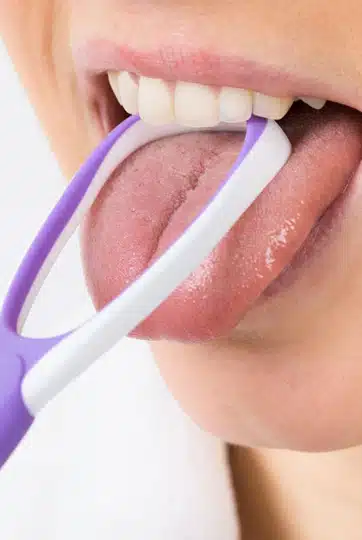
Tongue cleaning is the key to fresher, cleaner breath
Cleaning your tongue is very important. You can purchase a Colgate 360 toothbrush with the tongue cleaner on the back of the toothbrush to clean your teeth and tongue. After tooth brushing your upper and lower teeth with an antibacterial toothpaste, flip the toothbrush over to the tongue cleaner, place it in the tongue's posterior region, and move it forward to the anterior section of the tongue. After scraping that portion of the tongue, rinse the tongue brush off with warm water to remove any odor-causing bacteria. Then replace the tongue brush in the next posterior section and repeat as described above.
Consult your dentist or dental hygienist when choosing oral hygiene aids to help eliminate plaque and odor-causing bacteria, and review the techniques used at home. Also, ask your dental professional what oral hygiene products they would consider you to use to help eliminate bad breath (antibacterial toothpaste, antiseptic mouth rinse, tongue brushes or scrapers, and interproximal cleaning devices).
The key to a clean, fresh mouth is optimal oral hygiene conducted at home regularly and professional recommendations discussed by your dental professional.

